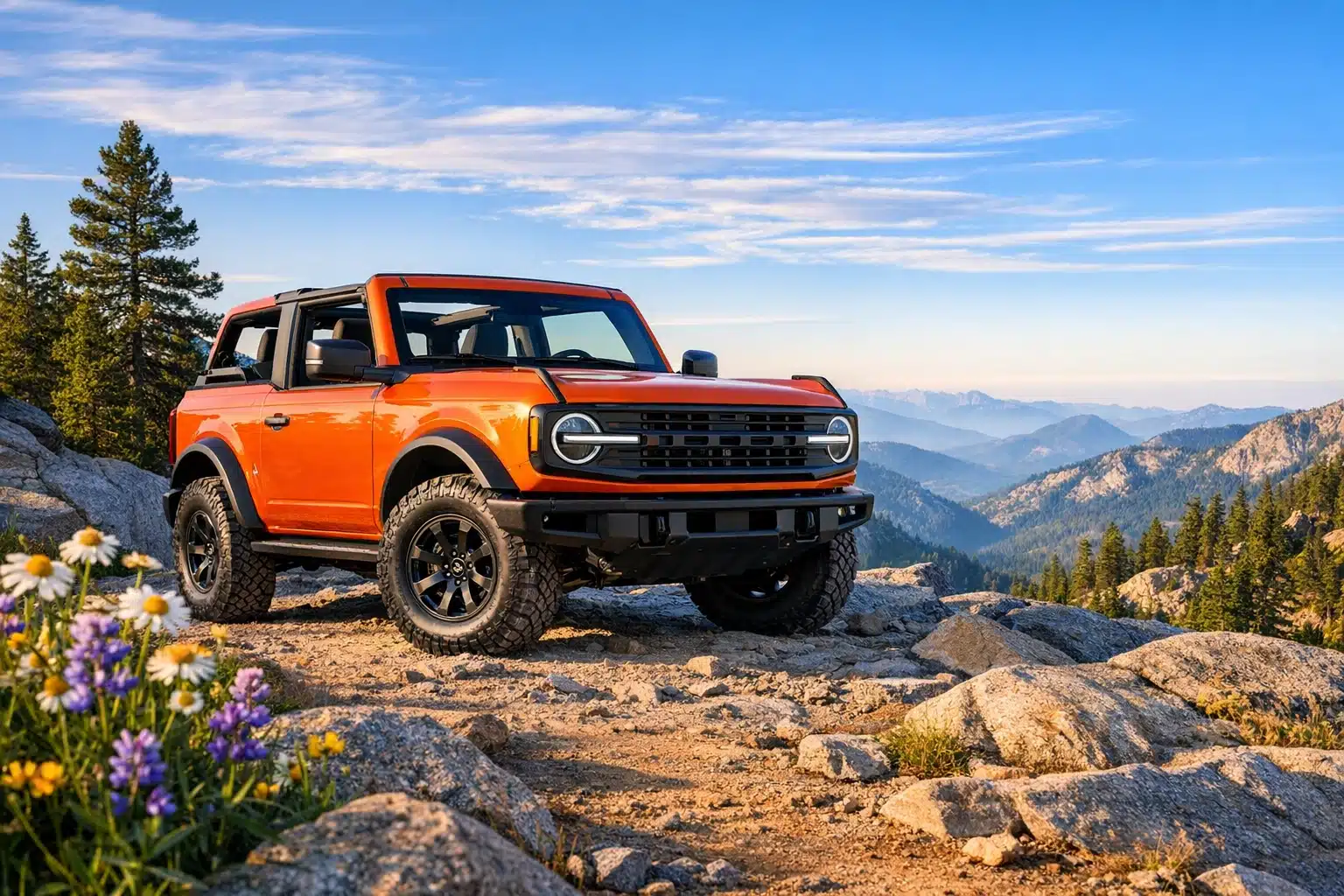
2026 Ford Bronco Highlights: Key Features and Updates
The 2026 Ford Bronco matters because few vehicles try to serve two masters as boldly: weekday commuting and genuine backcountry exploration. Its boxy silhouette may grab attention first, but the real story is how the Bronco balances removable-roof fun, serious 4×4 hardware, and a cabin modern enough for daily life. For shoppers weighing a Wrangler, 4Runner, or Defender, understanding the Bronco’s highlights can save money and sharpen expectations. This article breaks down the areas that deserve the closest look before you choose a trim, powertrain, or trail package.
Outline: • Section 1 explains the Bronco formula and why separating confirmed traits from likely carryover features matters. • Section 2 explores trail hardware, terrain capability, and comparisons with key rivals. • Section 3 focuses on engines, transmissions, ride quality, and daily usability. • Section 4 covers interior tech, safety, comfort, and practicality. • Section 5 turns the spotlight toward trims, value, and the kind of driver who will benefit most from the 2026 Bronco.
1. The Big Picture: What Makes the 2026 Ford Bronco Relevant
When people talk about the 2026 Ford Bronco, the smartest starting point is not a single trim or a single spec sheet. It is the underlying idea of the vehicle. The Bronco sits in a part of the market that has become unusually competitive and unusually emotional. Buyers are no longer looking only for a family SUV with rugged styling. Many now want something that can genuinely leave pavement behind, handle bad weather with confidence, and still feel usable in a grocery-store parking lot on Tuesday night. That is where the Bronco remains highly relevant.
As with any new model year, final equipment, package names, pricing, and powertrain availability should be confirmed through official Ford sources or local dealers. Still, the Bronco’s recent identity gives a strong framework for understanding the likely highlights. The formula has centered on body-on-frame construction, available two-door and four-door configurations, removable roof panels, removable doors, and a broad spectrum of off-road-focused options. That combination matters because it separates the Bronco from most midsize SUVs, which tend to lean heavily toward comfort and styling while giving up some hard-trail credibility.
Several traits continue to define why the Bronco stands out:
• A traditional truck-based structure that supports real off-road abuse
• Open-air features that few direct rivals offer in the same way
• A wide trim and package ladder, from casual adventure use to serious trail work
• Distinctive design that is functional as well as nostalgic
• A clear identity separate from the smaller Bronco Sport crossover
That last point is important. Some shoppers still confuse the Bronco with the Bronco Sport, but they serve different purposes. The Bronco Sport is a compact crossover tuned more toward everyday utility, while the Bronco is the tougher, more modular, more specialized machine. If you want the vehicle that looks like it was sketched with dirt on the drafting table, this is the one.
Compared with a Jeep Wrangler, the Bronco has often appealed to drivers who want strong trail hardware without sacrificing as much steering precision and cabin polish. Compared with a Toyota 4Runner, it delivers more open-air character and more visual drama, though not always with the same simplicity of ownership philosophy. In short, the 2026 Bronco matters because it remains one of the few SUVs that can be bought as both a lifestyle statement and a legitimate piece of outdoor equipment. That dual personality is its central highlight, and everything else flows from it.
2. Off-Road Highlights: Trail Hardware, Chassis Design, and Real Capability
If the Bronco earns its reputation anywhere, it is on rough ground. The off-road story is not a costume here; it is built into the vehicle’s layout, available driveline components, and trail-focused engineering. Recent Bronco models have offered multiple 4×4 systems, available low-range gearing, locking differentials, aggressive all-terrain or mud-terrain tires, and packages such as Sasquatch that transform the vehicle from merely capable to distinctly serious. If Ford continues that playbook for 2026, these are likely to remain among the Bronco’s most compelling highlights.
The body shape also helps more than the design photos suggest. Short overhangs, upright sightlines, and visible fender edges make it easier to place the Bronco on narrow trails or over obstacles. Drivers often talk about how confidence begins with visibility, and the Bronco understands that. You can see corners, judge lines, and work through rough terrain with less guesswork than in many rounded, high-beltline SUVs. On technical trails, that matters almost as much as raw traction.
Key off-road features that have defined the Bronco experience include:
• Available front and rear locking differentials for improved traction
• A low-range transfer case for steep climbs and controlled descents
• Terrain management settings designed for sand, mud, rocks, and snow
• Available 35-inch tires on certain packages
• Skid plates, steel bumpers, and disconnecting sway bar hardware on trail-focused versions
• Trail camera views and low-speed control systems that reduce driver fatigue
Against rivals, the Bronco lands in an interesting place. The Jeep Wrangler still has deep credibility, a huge aftermarket, and a devoted owner community. It also keeps a strong edge in old-school image and, in some versions, articulation feel. But the Bronco has frequently countered with more composed high-speed behavior, clever camera integration, and an easier learning curve for newer off-roaders. The Toyota 4Runner, meanwhile, is durable and straightforward, but it does not lean as hard into modular open-air fun or the same breadth of specialized trail packages.
One practical point deserves attention: capability packages change the ownership experience even when the vehicle is not on a trail. Big tires, lifted suspension tuning, and aggressive tread patterns can increase road noise, affect braking feel, and make parking-garage life less graceful. That is not a flaw so much as an honest tradeoff. For drivers who spend weekends on forest roads, beach sand, or rocky routes, the payoff can be huge. For drivers who mostly commute, the smartest 2026 Bronco may be the one with selective off-road upgrades rather than every available hardware box checked at once.
3. Powertrains and Road Manners: How the Bronco Balances Adventure with Daily Driving
The powertrain discussion is where excitement and realism need to meet. Many Bronco shoppers love the image of an all-terrain machine, but they also need something that merges onto highways cleanly, feels relaxed in traffic, and does not become tiring after an hour behind the wheel. If the 2026 Bronco follows the pattern of recent years, buyers can expect turbocharged gasoline options similar to the familiar 2.3-liter four-cylinder and 2.7-liter V6, though exact availability should be verified for the final model-year lineup. Those engines have helped define the Bronco’s personality by offering useful torque without turning the SUV into a blunt, old-fashioned fuel sponge.
The four-cylinder has generally been the logical entry point for shoppers who want solid performance and, where available, the appeal of a manual transmission. The V6 has been the more relaxed, punchier choice for heavier builds, larger tires, and drivers who prefer stronger acceleration without working the powertrain as hard. Neither approach is automatically better. It depends on how the vehicle will be used. A lightly optioned Bronco on modest tires can feel very different from a four-door model carrying extra armor and an aggressive wheel-and-tire package.
Daily-driving considerations deserve equal weight:
• Recent Broncos have typically offered towing in the 3,500-pound range, which is usable but not class-leading
• Larger tire packages can noticeably affect ride comfort, braking feel, and fuel costs
• Wind noise is part of the open-air ownership experience, especially with removable roof components
• Steering and body control are often more settled than people expect from a dedicated off-road SUV
• Manual-transmission availability, when offered, adds personality but may not suit every commute
Compared with the Wrangler, the Bronco has often been praised for feeling a bit more planted and less busy on uneven pavement, especially at higher speeds. Compared with a 4Runner, it can feel more modern in steering response and drivetrain flexibility, though the Toyota may appeal to buyers who value a simpler, more conservative road feel. The Bronco lives between those worlds. It is not trying to be a luxury SUV, and it is not apologizing for its shape or mission. Still, it usually avoids feeling crude, which is a major part of its appeal.
The clever part of the Bronco experience is that it encourages honesty. If you choose smaller wheels, saner tires, and a middle trim, it can be a more livable everyday vehicle than its rugged looks suggest. If you choose every hardcore upgrade, it will remind you daily that trail capability is never free. That tension is not a weakness; it is the reality of buying a true 4×4. The 2026 Bronco’s best powertrain and chassis setup will be the one that matches your routine, not the one that looks most dramatic in a brochure photo.
4. Interior, Technology, and Practical Ownership: More Than a Retro Shell
One of the Bronco’s most important achievements has been proving that a rugged SUV does not need to feel primitive inside. The cabin design has leaned into a purposeful look, with chunky controls, grab handles, easy-to-read displays, and materials intended to survive mud, dust, and wet gear better than the average family crossover. At the same time, the Bronco has not ignored the modern expectations that buyers now consider basic. Smartphone integration, large infotainment screens in many versions, available camera systems, driver-assistance tech, and configurable displays have turned it into something more sophisticated than a nostalgia project.
That mix of toughness and convenience matters because Bronco owners often use the vehicle in very different ways from one day to the next. On Saturday it may be carrying camping gear and a cooler. On Monday it may be handling school pickup or office parking. Ford’s recent Bronco strategy has addressed this by making the interior modular and practical rather than simply stylish. Available marine-grade vinyl, rubberized flooring on some trims, drain plugs, and accessory mounting points are details that speak to real use, not just showroom theatrics.
Practical highlights to watch for in the 2026 Bronco include:
• Infotainment features such as wireless phone connectivity and voice control
• Available 360-degree camera support that becomes especially useful off-road
• Durable seating and floor options for owners who expect mud, sand, or snow
• Auxiliary switches on some trims for lights, compressors, or other trail accessories
• Flexible cargo space, especially in four-door versions
• Driver-assistance tools such as blind-spot monitoring and adaptive cruise where equipped
There are tradeoffs, and they should be acknowledged clearly. The two-door model brings style, maneuverability, and a classic proportion, but rear access and cargo flexibility are naturally tighter. The four-door is more practical for families or road trips, though it is less compact on narrow trails and urban streets. Roof-panel storage, door removal, and open-air driving sound romantic, and often they are, but those features also require planning, physical effort, and some tolerance for extra wind and weather management.
Against rivals, the Bronco often feels more thoughtfully modern than old-school off-roaders that still treat interior design as an afterthought. Yet it stops short of trying to be plush in the manner of premium SUVs. That is the right choice. The best Bronco interiors feel like durable tools that learned good manners, not fragile gadgets wearing hiking boots for fashion. For 2026 shoppers, that is a real highlight: the vehicle can still feel adventurous without making daily use more difficult than it needs to be.
5. Conclusion: Which 2026 Bronco Buyer Gets the Most Value?
The final question is the one that matters most: who is the 2026 Ford Bronco really for? The short answer is that it suits drivers who want authenticity in their SUV purchase. That does not mean every owner needs to crawl over boulders or spend weekends deep in the woods. It means the person buying a Bronco should value its capability enough to appreciate the compromises that come with it. The best Bronco customer is someone who wants the option of real adventure, not just the appearance of it.
Trim selection will make or break the ownership experience. Bronco lineups in recent years have ranged from more approachable, value-focused versions to highly specialized off-road trims and appearance packages. Depending on the final 2026 structure, shoppers may again encounter choices that roughly mirror comfort-oriented, equipment-balanced, and trail-dominant personalities. A smart buy is rarely the most expensive one. For many owners, the sweet spot is the trim that delivers solid tire and suspension capability, useful technology, and everyday comfort without piling on every aggressive hardware feature available.
A practical decision list looks like this:
• Choose two doors if compact size, classic style, and maneuverability matter most
• Choose four doors if passengers, cargo, and road-trip flexibility matter more
• Pick extreme off-road packages only if you will truly use them
• Verify transmission choices early, especially if you want a manual
• Check tire replacement cost, roof configuration, and accessory pricing before signing
• Compare insurance, fuel, and parking realities, not just monthly payment figures
For cross-shoppers, the Wrangler still makes sense if open-air culture and aftermarket depth are top priorities. The 4Runner fits those who prefer a more traditional enclosed-SUV experience with less emphasis on roof-off playfulness. The Bronco sits between those poles with uncommon confidence. It offers style that is backed by engineering, not just design theater. It also remains one of the few vehicles that can feel equally at home outside a coffee shop and at the start of a trailhead, which is harder to achieve than advertising usually admits.
So the clearest takeaway for the target audience is simple. If you want a capable 4×4 that feels modern, visually distinctive, and genuinely usable beyond pavement, the 2026 Ford Bronco deserves close attention. If you want the easiest, quietest, or most appliance-like SUV in the class, it may not be your best fit. But for drivers who smile at the idea of removable roof panels, visible trail lines, and hardware that means business, the Bronco continues to offer a rare blend of fun and substance. That, more than any single feature, is its real highlight.